coal-on-fire-1150x480

Understanding the Science Behind Biochar Quality

Not all biochars are created equal—they vary widely in quality, from poor to outstanding. Without a solid understanding of the fundamentals of biochar manufacturing, it's easy to end up with an inferior product that fails to deliver the expected benefits. The highest-quality biochar comes from healthy trees in forests that have died from natural causes or fire. Materials like bushes, underbrush, or rotting trees simply don't produce the same results, as they lack the structural integrity and carbon content needed for optimal outcomes.

15-site-kilns-1

The Science of Biochar Production

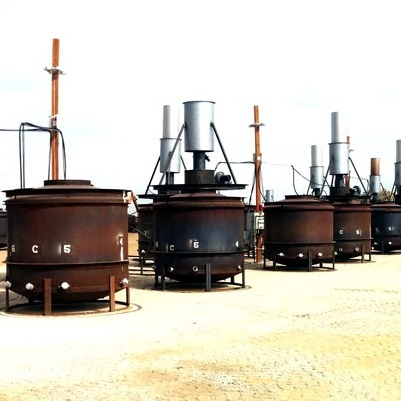
Creating biochar is essentially an organic chemistry process known as pyrolysis. This involves heating wood in an oxygen-free environment to convert its carbon into stable polyaromatic hydrocarbons. In nature, dead trees decompose through weather and microorganisms, releasing carbon dioxide (CO2) back into the atmosphere, where it has a relatively short half-life. By contrast, pyrolysis transforms that carbon into polyaromatic structures with a half-life of approximately 17,000 years. This long-term carbon sequestration locks away carbon that would otherwise contribute to atmospheric CO2, making biochar a valuable tool in carbon credit exchanges and climate mitigation efforts.

Banner

Evaluating and Optimizing Biochar

Judging biochar quality isn't something you can do by sight or touch—a chemical assay is essential. High-grade biochar typically contains around 90% pure biochar with minimal ash, while low-quality versions have high ash content and little actual biochar. The key to superior quality lies in the pyrolysis process: longer cooking times in an oxygen-free kiln result in greater conversion to stable biochar. This extended process not only boosts carbon content but also enhances properties like water-holding capacity, which can be verified through lab testing. In short, longer pyrolysis yields better, more effective biochar.

Why Biochar behaves differently than other organic matter

Biochar is produced by heating biomass in a low-oxygen environment (pyrolysis). This creates a carbon-rich material with distinctive surface properties and pore structure, which explains many observed soil benefits—while acknowledging results vary by biochar and site conditions.
Pyrolysis: turning biomass into stable carbon

Pyrolysis breaks down biomass through heat with limited oxygen, producing gases, liquids, and a solid char fraction. Production conditions (temperature, residence time, feedstock) strongly influence final biochar properties.

Slow vs fast pyrolysis (high-level)
Some producers emphasize slow pyrolysis approaches for processing variability and producing consistent biochar characteristics (as described in similar industry explanations).
Why results vary

Biochar outcomes vary because of:

  • Feedstock differences

  • Production conditions

  • Particle size and placement

  • Soil texture, climate, and management

  • Crop/turf species and irrigation style

We focus on consistent sizing, clear use recommendations, and pilot-first implementation to reduce uncertainty.

Surface area, pores, and adsorption

Biochar’s porosity and surface chemistry create many “sites” where water, nutrients, and organic compounds may interact—contributing to nutrient retention and water behavior changes in soils.

Nutrient dynamics and cation exchange

Biochar can influence cation exchange capacity and adsorption behavior, affecting how nutrients move and persist in soils and water. Application guidance stresses matching product and practice to goals.

Water behavior in soil

Many studies examine how biochar affects water holding capacity and hydrophobicity, emphasizing that outcomes depend on soil texture and biochar properties.

Soil biology and “living soil”

USDA/Forest Service soil health framing highlights soil as a living system; biochar’s structure can support microbial habitat and contribute to soil function.